American Traveler's Guide to Renting an Apartment in Paris
January 24, 2026
Renting an Apartment in Paris: Full Guide for Americans

Table of Contents
- Why Renting an Apartment in Paris Is Different from the U.S.
- Rental Contracts: What Americans Need to Know
- Deposits, Payments, and Fees Explained Clearly
- Choosing the Right Neighborhood for a First Stay in Paris
- Understanding Parisian Buildings Before You Book
- Air Conditioning in Paris Apartments: Expectations vs Reality
- Laundry in Paris Apartments: Washing Machines and Dryers
- Space, Layout, and Comfort Differences Americans Should Expect
- Internet, Electricity, and Daily Living Practicalities
- Legal and Safety Considerations for Short-Term Rentals in Paris
- Why Booking with a Professional Property Manager Matters
- Final Tips for American Travelers Renting an Apartment in Paris
- FAQs
Why Renting an Apartment in Paris Is Different from the U.S.

Paris is a historic city, and its housing stock reflects that. Many apartment buildings were constructed long before modern American standards existed. As a result, layouts, amenities, and building infrastructure in a Parisian apartment differ significantly from what U.S. travelers expect.
In the United States, short-term accommodation is heavily influenced by hotel standards: consistent layouts, elevators, air conditioning, large bathrooms, and standardized services. In Paris, apartments are designed first and foremost for long-term residents. Short-term rentals adapt to these spaces rather than redefining them.
This does not mean lower quality. It means different priorities. Location, walkability, and access to neighborhood life matter more than square footage or luxury amenities. Travelers who understand this distinction tend to have a much better experience with their Paris rental.
Rental Contracts: What Americans Need to Know
Most short-term apartment rentals in Paris do not involve signing a traditional lease agreement as Americans would recognize it. Instead, bookings are governed by rental terms, house rules, and confirmation documents provided at the time of reservation.
These rental contracts typically specify:
- Stay dates and maximum occupancy
- Cancellation conditions
- Guest responsibilities
- Rules regarding noise, smoking, and pets
For furnished rentals, contracts are often implicit rather than physically signed. That said, the terms are legally binding, and travelers should review them carefully before confirming any booking.
Unlike U.S. vacation rentals, flexibility can be more limited. Strict cancellation policies are common, especially during peak travel seasons. Travelers should not assume they can modify dates without penalty unless this is explicitly stated in the rental contract.
Deposits, Payments, and Fees Explained Clearly

Security deposits are common for apartments in Paris, particularly for professionally managed properties. These deposits are often pre-authorized on a credit card rather than charged outright. The purpose is to cover potential damage, missing items, or excessive cleaning.
Cleaning fees are standard and should not be confused with daily housekeeping. In Paris, cleaning fees usually cover:
- Professional turnover cleaning
- Laundry for linens and towels
- Property inspection
Unlike many U.S. hotels, daily cleaning is rarely included unless specifically stated.
Pricing may initially appear higher than expected. This reflects several factors: central locations, strict rental regulations, professional management costs, and higher operating standards. When comparing options, travelers should evaluate value rather than monthly rent alone. Don't forget to factor in utility bills, which may or may not be included in the rental price.
Choosing the Right Neighborhood for a First Stay in Paris
Neighborhood choice has a greater impact on the Paris experience than apartment size or amenities. Paris is compact, but daily walking distance matters.
"Central" in Paris typically refers to the inner arrondissements, where most landmarks, dining, and transport connections are located. Staying centrally reduces reliance on public transport and allows travelers to experience Paris on foot.
Residential neighborhoods offer charm and calm but may feel disconnected for first-time visitors. On the other hand, overly tourist-heavy areas can feel crowded and less authentic.
The best neighborhoods balance walkability, local life, and transport access. Travelers should prioritize proximity to metro lines, cafés, bakeries, and markets rather than focusing solely on famous landmarks. A good neighborhood guide can be invaluable in making this decision.
Understanding Parisian Buildings Before You Book
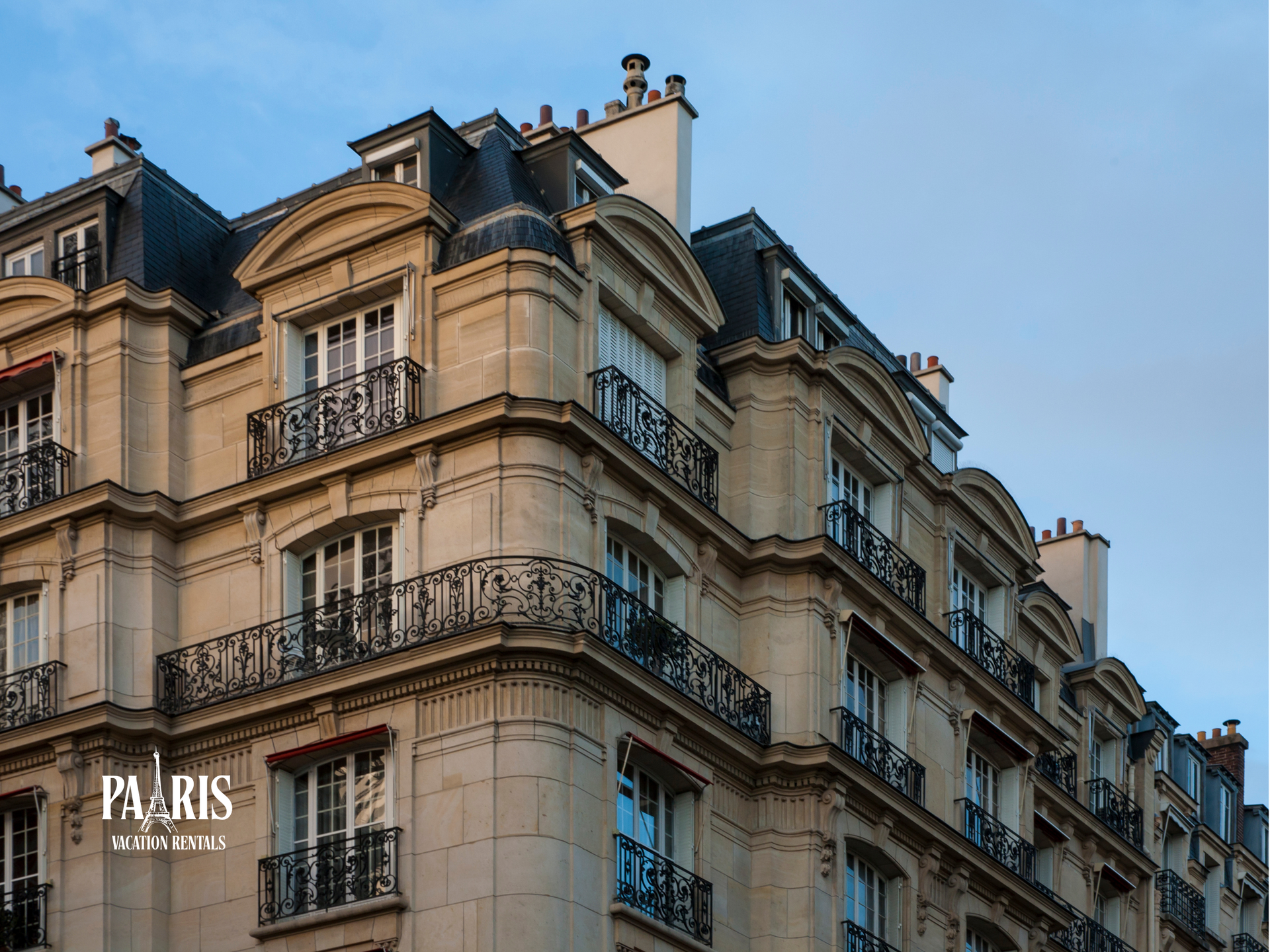
Parisian buildings often surprise American travelers. Many are narrow, multi-story structures with shared stairwells and limited common space.
Elevators are not guaranteed. Smaller buildings may have none at all. Even when elevators exist, they are often compact and may not accommodate large suitcases easily. Travelers with mobility concerns should always confirm elevator access in advance.
Floor numbering also differs. The ground level is called the "rez-de-chaussée." The next level up is the first floor, which Americans would consider the second floor. This distinction matters when booking walk-up apartments.
Shared entry doors, internal courtyards, and communal staircases are normal and part of Parisian residential life.
Air Conditioning in Paris Apartments: Expectations vs Reality
Air conditioning is one of the most misunderstood aspects of Paris vacation apartments. Unlike in the United States, AC is not standard, even in high-end properties.
Historically, Paris summers were mild, and buildings were designed to retain heat rather than expel it. While summers have become warmer, infrastructure has not universally adapted.
Some apartments offer portable units, partial systems, or cooling fans. Central air conditioning remains rare. Travelers visiting during warmer months should confirm cooling arrangements explicitly and adjust expectations accordingly.
For many travelers, strategic ventilation, shutters, and fans provide sufficient comfort. Understanding this in advance prevents disappointment.
Laundry in Paris Apartments: Washing Machines and Dryers
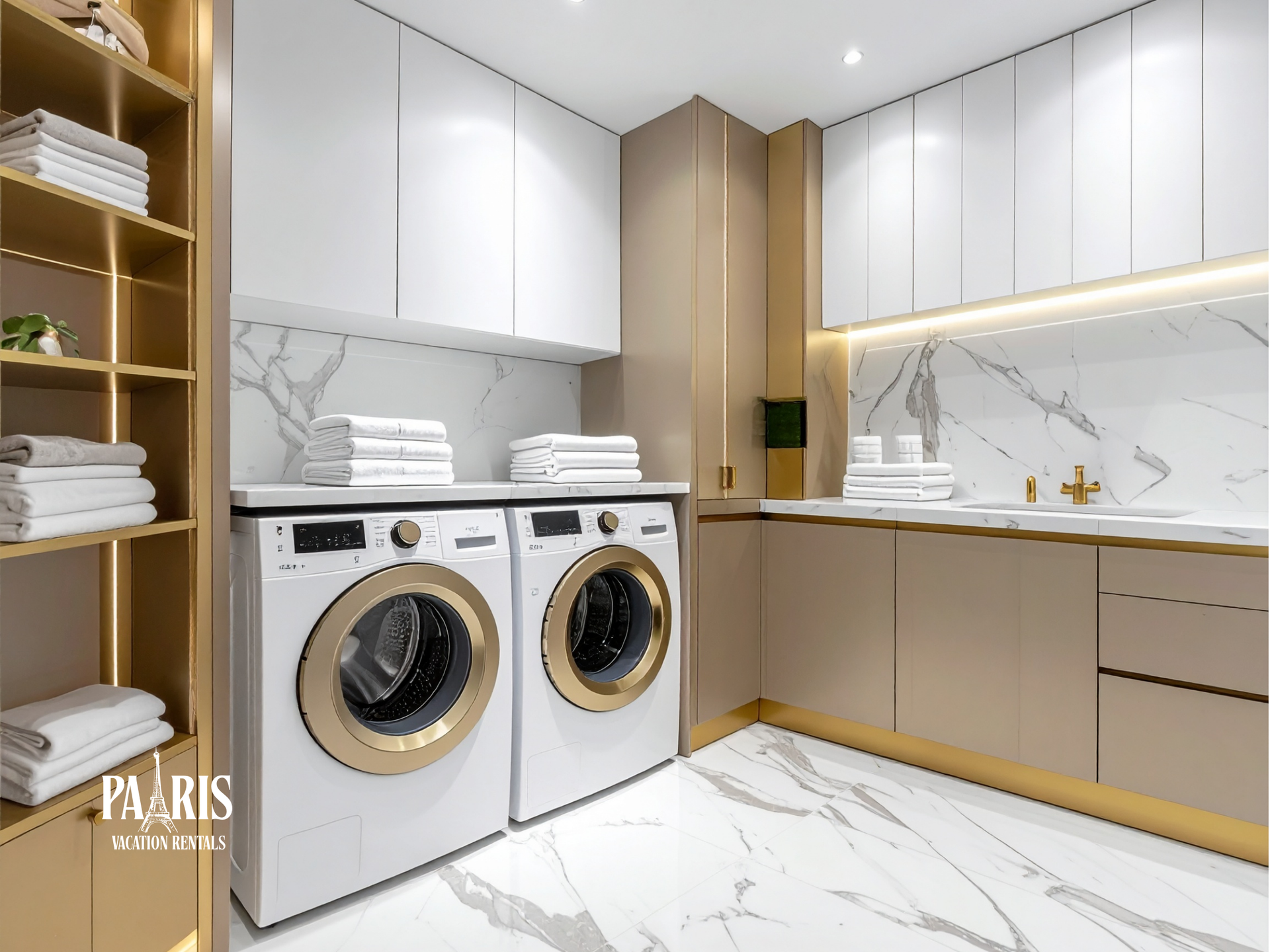
Washing machines are common in Paris apartments, but dryers are not. Space constraints and energy costs make dryers less practical in older buildings.
Instead, most apartments rely on air drying using racks or wall-mounted systems. This is standard practice in France and works well for longer stays.
Travelers accustomed to large washer-dryer units should plan accordingly. For short stays, many guests find that light packing and occasional laundry are sufficient. For longer stays, air drying becomes part of the routine.
Space, Layout, and Comfort Differences Americans Should Expect
Paris apartments are smaller than typical American accommodations, especially in central areas. Layouts are optimized for efficiency rather than openness.
Living rooms may double as dining areas or sleeping spaces. Storage is limited, and closets are smaller. Bathrooms are compact, and separate toilets are common in older apartments.
Beds may be European sizes rather than U.S. queen or king equivalents. Sofas and furniture are often lighter and more flexible.
Comfort in a Parisian apartment comes from thoughtful design, natural light, and location rather than size. Travelers who embrace this perspective often find the experience charming rather than restrictive. Studio apartments are common and can be a great option for solo travelers or couples.
Internet, Electricity, and Daily Living Practicalities
Wi-Fi in Paris apartments is generally reliable and suitable for streaming, video calls, and remote work. Speed may vary by building, but most professionally managed apartments meet modern connectivity standards.
Electrical outlets differ from U.S. plugs, and voltage is higher. Travelers should bring appropriate adapters and avoid using high-wattage U.S. appliances.
Heating systems vary. Older buildings often use centralized heating controlled seasonally, while newer renovations may include individual systems. Travelers visiting during transitional seasons should confirm heating availability if comfort is a priority.
Kitchen appliances may be smaller or different from what Americans are used to. Familiarize yourself with the appliances upon arrival to ensure a smooth stay.
Legal and Safety Considerations for Short-Term Rentals in Paris
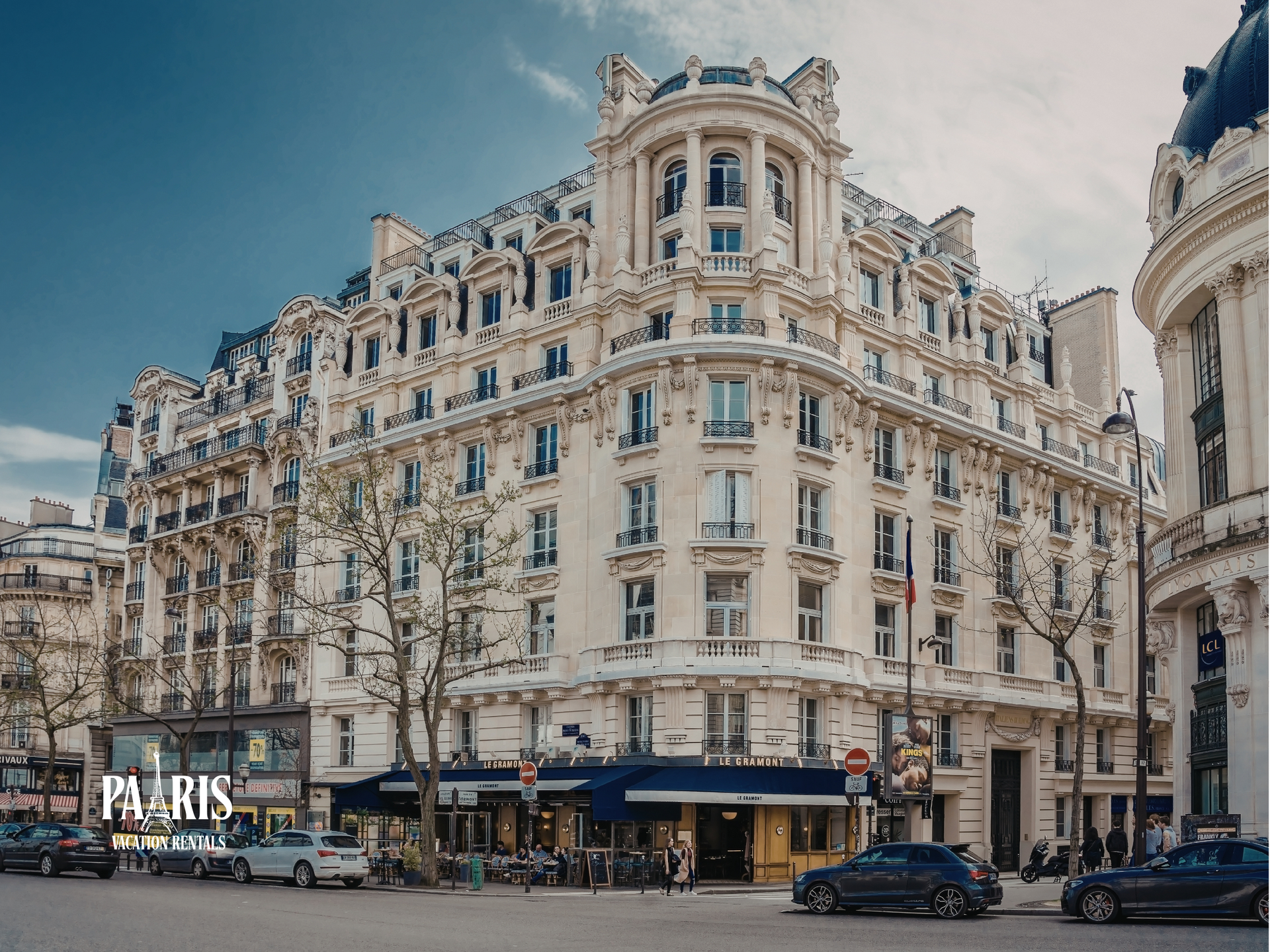
Paris has some of the strictest short-term rental regulations in Europe. Not all listings available online are legally compliant.
Illegal rentals may face sudden cancellation, lack proper insurance, or provide no local support in case of issues. Guests may be left without recourse if problems arise.
Travelers should prioritize rentals that are professionally managed, transparently described, and clearly compliant with local regulations. This reduces legal risk and improves overall reliability.
Why Booking with a Professional Property Manager Matters
The difference between peer-to-peer listings and professionally managed apartments becomes clear during real-world situations: late arrivals, maintenance issues, or unexpected questions.
Professional property managers offer structured check-ins, verified listings, responsive support, and legal compliance. This matters particularly for American travelers unfamiliar with local systems.
Paris Vacation Rentals provides professionally managed apartments in central Paris, offering a secure and reliable option for travelers who want the apartment experience without uncertainty. The focus is on compliance, guest support, and consistency rather than informal hosting.
Final Tips for American Travelers Renting an Apartment in Paris
Tip #1: Confirm key details before booking, including elevator access, floor level, cooling options, laundry setup, and check-in procedures. Clear questions upfront prevent most misunderstandings.
Tip #2: Review arrival and entry instructions carefully before departure. Paris apartments often use secure doors, key codes, or scheduled check-ins that differ from U.S. hotel practices.
Tip #3: Pack realistically and account for stairs, compact elevators, and limited storage. Large suitcases can be impractical in older Parisian buildings.
Tip #4: Align expectations with Parisian housing norms rather than U.S. hotel standards. Apartments prioritize location and functionality over space and standardized amenities.
Tip #5: Consider an apartment tour or virtual viewing when available, especially for longer stays. Many professional property managers offer this to clarify layout and amenities in advance.
Tip #6: Expect differences in communication style. French landlords and property managers may be more direct or formal. Clear, polite communication and patience help ensure a smooth experience.
Tip #7: Embrace the character of Paris vacation apartments. With the right mindset, renting an apartment offers a more authentic, comfortable, and local way to experience the city — and often becomes the preferred option for American travelers.
FAQs
Do Paris apartments usually have elevators?
No. Many Paris buildings are older and do not have elevators, especially in central areas. Elevator access should always be confirmed before booking.
Is air conditioning standard in Paris apartments?
No. Air conditioning is not common in Paris. Some apartments offer portable or partial cooling, but central AC is rare.
Are security deposits required for short-term rentals in Paris?
Often, yes. Deposits are typically pre-authorized on a credit card and released after checkout if no damage is found.
Do Paris apartments usually have washing machines and dryers?
Washing machines are common. Dryers are rare, and air drying is the standard solution in most apartments.
Are all short-term apartment rentals in Paris legal?
No. Paris has strict regulations, and not all listings comply. Booking with a professional, regulated operator reduces legal and booking risks.